

BUDDHISM INTO THE YEAR 2000 : ค้นหาหนังสือธรรมะ หน้า 110 / 119
หน้าหนังสือทั้งหมด
23
Understanding the Path to Nirvana: The Buddha's Teachings
the attainment of Nirvana. In the Dhammacakkapavattana Sutta, further to the clarification of the profitable path of practice, the Buddha stipulates paths of practice that are unprofitable and might e
This text discusses the Buddha's elucidation of the paths to Nirvana as presented in the Dhammacakkapavattana Sutta. It highlights the unprofitable practices, particularly the path of sensual indulgen
31
Dhammacakkappavattana Sutta: The Sermon
Dhammacakkappavattana Sutta:
The Sermon
Something which you will find at the beginning of every sutta are Aṅanda’s words 'Evam.e sutam...': i.e. ‘Thus have I heard (directly from the Lord Buddha)
The Dhammacakkappavattana Sutta begins with Aṅanda's phrase 'Thus have I heard' and recounts the Buddha's teachings delivered at the Isipatana Deer Park. The Blessed One addresses the group of five mo
35
The Dangers of Sensual Indulgence in Buddhist Teachings
16. A man who falls in love with an ogress: The Buddha also compared indulging the pleasures of the senses to a man who falls in love and co-habits with an ogress who he takes for a human maiden (but
In the teachings of the Buddha, the indulgence of the senses is likened to a man falling in love with an ogress and a crow feeding from a floating elephant carcass. These metaphors illustrate the inhe
38
The Consequences of Attachment to Sense Pleasure
O! Monks! Some warriors go to the trouble to erect defences of brick and mortar to stop their enemies being able to climb over, they fill their arsenals full of weapons. However, if the enemy should p
This text discusses how attachment to sense pleasures leads to various forms of suffering and wrongdoing. It illustrates the consequences of indulgence, including violence and crime, and emphasizes th
45
The Buddha's Teachings on Right Livelihood and Moral Conduct
the monk's equivalent of Right Livelihood, by avoiding such evils as fortune telling, sacrifices or interpreting dreams, because these are all 'low arts'[tiracchānavijjā]. The Buddha even prohibited m
This text discusses the Buddha's teachings on Right Livelihood, emphasizing the avoidance of 'low arts' such as fortune telling and the prohibition of harmful trades for monks and laypeople. In partic
51
Understanding Suffering in Buddhism
depressed and dejected.
1.1.8 Feeling slighted [domanassa] : This is when one has a 'chip on one's shoulder' (to be aggressively sensitive about a particular thing or bear a grudge).
1.1.9 Bemoani
This text explores the concept of suffering as taught by the Buddha, outlining twelve types of suffering including feeling slighted, bemoaning losses, and separation from loved ones. It highlights how
53
The Noble Truth of the Origin of Suffering
2. Explanation of the Noble Truth of the Origin of Suffering
The Lord Buddha’s explanation of the Origin of Suffering includes all four of the Origin of Suffering’s implications in the light of the Fo
The Lord Buddha explains the Origin of Suffering, emphasizing craving as the root cause affecting all living beings. It identifies two forms of craving: self-centred craving (for personal advantage) a
55
Understanding the Noble Truth of the Cessation of Suffering
sensuality. In this way, the Buddha shows the inter-relation between the Noble Truth of the Cessation of Suffering and the Noble Eightfold Path.
3. Explanation of the Noble Truth of the Cessation of S
This text delves into the Noble Truth of the Cessation of Suffering as per the teachings of the Buddha. It defines the Cessation of Suffering in four aspects - as release from the cycle of existence,
56
The Noble Eightfold Path and the Cessation of Suffering
"The wise one who trains himself [yoĝāvācara] should see that the builder is ‘Craving’ who fashions the home that is the physical body of each and every living being, to keep those living beings being
This text delves into the teachings of the Buddha regarding the nature of craving as the cause of suffering and the means of escape through the Noble Eightfold Path. The concept of the 'Elixir of Deat
68
Understanding the Body as a House
of the six senses¹ and the deterioration of the thirty-two parts of the body², causing the body to become shrivelled and unattractive.
In actual fact, this house that is our body, has craving [tanhā
This text offers a profound understanding of the human body as a metaphorical house constructed by craving. It illustrates how the various parts of the body represent different elements of a house, hi
71
The Suffering of Death
them terrible fear of hell at the end of their life. This is another aspect of the suffering of death.
As for the wealthy who have so many possessions, or those with lots of relatives, there is a tend
This text discusses the various aspects of suffering that accompany death, including the fear of hell, anxiety over possessions and loved ones, and the experiences of those who face execution. It high
73
Understanding Types of Suffering in Buddhism
parideva dukkha
The Buddha characterized this form of suffering as that which produces tears of anguish whenever we are unable to give up our attachment to something. Again the cause might be the dece
This text delves into the different forms of suffering defined by the Buddha. It describes 'parideva dukkha' as the anguish leading to tears due to attachment loss, primarily affecting those grieving
90
Understanding the Pursuit of Happiness and the Cycle of Existence
Those who search for happiness via sense pleasure only
experience happiness at the moment before suffering mani-
fest itself. As soon as suffering becomes manifest, such peo-
ple are often so shocked
This text discusses the fleeting nature of happiness derived from sense pleasures and the inevitable suffering that follows. It compares individuals ensnared by cravings to a rabbit caught in a hunter
98
Exploring Sensual Delights and the Six Sense Organs
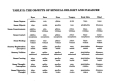
TABLE II: THE OBJECTS OF SENSUAL DELIGHT AND PLEASURE
| | Eyes | Ears | Nose | Tongue | Body Skin
This table presents an intricate overview of the six sense organs in relation to their corresponding objects, consciousness, contact, feelings, registration, volition, craving, thought conception, and
101
Understanding Sensory Craving and Attachment
registration is implicated in the attachment we have to sensual pleasures. Again, each of the six senses has its own channel of sense-volition therefore there are a further six areas in which the prac
This text delves into the role of sensory experiences in fostering attachment to sensual pleasures, with a focus on the six senses: visual, auditory, olfactory, gustatory, tactile, and mental. Each se
110
Understanding the Dhamma Body and Its Levels
reach the station, from there we take the train to the airport and eventually take the aeroplane that will take us to our destination.
All the various inner spheres and bodies all the way from the Phy
This text delves into the concept of the Dhamma Body, highlighting its intricate structure composed of multiple layers, each representing a different level of spiritual refinement. Luang Phaw Wat Pakn
111
Understanding the Dhammakāya in Insight Meditation
called the ‘Coarse Dhammakāya Arahant’ or the ‘Subtle Dhammakāya Arahant’ — the latter two being the bodies of enlightenment of the arahant. The Dhammakāyas are all transcendental [lokuttara] in natur
This text delves into the concept of Dhammakāya Arahant, distinguishing between the Coarse and Subtle Dhammakāya. It explains that these bodies are transcendental and consist of pure aggregates that a
112
Understanding the Dhamma Body and Overcoming Mental Defilements
to enslave the mind and how we can overcome them. This is a major difference from the naked (physical) eye to which the defilements are invisible. The limits of our human senses are to know the manife
The passage discusses the limitations of human senses in perceiving mental defilements such as greed, hatred, and delusion. It highlights the importance of the Dhamma Body in providing insight into th
121
The Noble Eightfold Path: Ethical Conduct and Mindfulness
Stealing [adinnādāna]: Taking that which is not given;
Committing adultery [kāmesumicchācarā]: abstaining from sexual relations outside marriage.
5. Right Livelihood
The Lord Buddha taught his monks
This text discusses key principles of the Noble Eightfold Path, focusing on ethical conduct such as Right Speech, Right Action which includes abstaining from stealing and committing adultery, and Righ
122
The Journey to Inner Bodies and Enlightenment
(also called the 'astral body' or 'dream body') all the way up to the various bodies of enlightenment.
The meditator can see and consider bodies within the body by setting their attention to the centr
This text describes the meditative journey towards discovering inner bodies, known as the astral or dream body, and various spheres of awareness that lead to enlightenment. It details how focusing att